Showing posts with label Android. Show all posts

Saturday, April 11, 2026

Save & Sync Passwords

Safe Cross-device Password Sync

So you've smartly avoided closed-source proprietary password managers in favor of a good free open-source (FOSS) password manager, and you now need to safely sync your passwords between your devices. The best way to do that, given Internet access, is to store securely-encrypted password data in the cloud, which also provides essential backup. (You just need to memorize one unique secure password for that task. All other passwords are available in your password manager.)

My recommended approach:

Computer 

Setup Google Drive to Mirror (or Stream) between your computer and the cloud.
This approach is also supported by other cloud providers (e.g., OneDrive, Dropbox). 
Save your password file there locally and it will be automatically synced to the cloud.
Makes it easy to access with your computer password manager (e.g., KeePass). 

Android

Directly access your password file using Android Storage Access Framework (SAF), which
supports Google Drive and other cloud document providers (e.g., OneDrive, Dropbox).
making it securely accessible to standard Android apps (e.g., Keepass2Android).

Tips

  1. With Google Drive set to Stream, be sure to set "Available offline" on your password file.
  2. KP2A Tile is a handy app that launches Keepass2Android from a Notification Tile. 

<<>>

Friday, March 27, 2026

Android Alarm Routine Fix

Android Alarm Routine
Calendar Events and Task Announcements

As a result of Google messing with Android Tasks and Calendar Events, the presets for announcing them in an Alarm Routine may no longer work.

The work-around is to remove the presets and replace them with Try adding your own custom actions:

  • Tell me about today's calendar
  • Tell me about today's tasks

Note: The two Adjust Media Volume settings in my example are to first set the volume to 50 for a quiet room, and lastly to set the volume to 85 for normal daytime operation.


Wednesday, March 18, 2026

Google Pixel 9 Pro

Google Pixel 9 Pro
Google Pixel 9 Pro
Beauty that's only skin deep 

The Google Pixel 9 Pro is a study in contradictions. On the outside, it is one of the most refined, premium-feeling Android phones ever. On the inside, it is powered by a chip that would be more at home in a $500 mid-ranger than a $999 flagship, that's further handicapped by an out-of-date memory interface.

The heart of the Pixel 9 Pro is the Tensor G4. On paper, it is an 8-core processor built on Samsung’s 4nm node. In reality, it is a chip that barely outpaces its predecessor and gets crushed by the competition in raw power. It only has roughly half the multi-core power of a modern Snapdragon or Apple A-series chip.

Worse, to extend battery life, Google has resorted to aggressive power management, especially of background tasks. The result is a phone that lacks the responsiveness and smoothness of a high-end phone. It's particularly noticeable on speech-to-text, where phone struggles make it painful to the point of being unusable.

It also falls down on AI tasks. Google is pushing its Gemini AI to manage the phone, but it lacks the quick and predictable response of the old algorithmic Assistant (which is fortunately still available).

Is there a better phone? Not if you value the compact size. The better phones are bigger. 

Bottom Line: It's a decent phone if you get it on sale, tune it carefully, and don't push it too hard. 

Note: There is now a Pixel 10 Pro, but it's not much better than the Pixel 9 Pro. 

Thursday, March 11, 2021

Google Voice Ringtone


Beta, thy name is Google.

FIX: Google Voice using Notification sound instead of Ringtone on Android

If you use Google Voice on your Android device, and
incoming calls are not using your desired ringtone, then
here's how to fix the problem:

  1. Open phone Settings.
  2. Select Apps & notifications.
  3. Select Voice (in All apps if not visible).
  4. Select Notifications.
  5. Under OTHER, select Incoming call.
  6. Expand Advanced. (On Android 11. Skip this step on Android 12.)
  7. Select Sound
  8. Select desired ringtone sound (which should then play) and close Settings.

NOTES

  1. Sound will still show "Default notification sound" (a bug), but correct Ringtone should now play.
  2. Verified with Google Pixel 4a 5G (bramble) running Android 11. May not apply to other versions.
  3. Android 12: There is no Advanced option. Skip Step 6.

YouTube Video: https://youtu.be/LzIIM-coqls


Friday, December 25, 2020

YouTube Music Playlist Shortcut

Google giveth and Google taketh away.

Play Music, originally Google Music, was mature and pretty good. There was really no reason for Google to create YouTube Music and shut down Play Music, forcing a painful transition on users, other than its own organizational convenience (but I digress). 

Part of the pain for users is that (as of this writing at least) YouTube Music doesn't work as well as Play Music, particularly for those using it for cloud storage of uploaded music more than for paid streaming. One of the more annoying issues is that some (not all) video playlists get mixed in with audio playlists, making it harder to navigate audio playlists.

The YouTube Music app for Android, which suffers from annoying pauses even with strong mobile signal, makes things worse by having no way to create Home screen icons for specific playlists, either by widget or by shortcut. (The Play Music app had a widget for a specific playlist.) Fortunately, there is a way to work around this limitation, but it's not obvious. On Android:
  1. Install the Website Shortcut app.
  2. Open YouTube Music in Chrome browser (not the app), and navigate to a desired playlist.
  3. Scroll up to 3 dot overflow menu at right end of Chrome navigation bar to Share that page to Website Shortcut:
    1. Add the Playlist name in the Label field.
    2. Select a custom icon (e.g., artist photo) if desired (otherwise it will be the YouTube Music icon).
    3. Create Shortcut, and install the icon on a Home screen.
Now that Home screen icon can be used to launch the specific playlist (in the app if it's installed rather than in Chrome).
  • A good way to organize these playlist icons is to create a Playlist folder on the Home screen.
  • Another way is to add a Home screen just for music playlist icons.
  • This same technique works for artist, album, contributed playlist, search, anything that can be shared.
The reason for using Website Shortcut is that Add to home screen in Chrome just creates an icon that launches the app, not the desired playlist.

Enjoy!

Thursday, December 3, 2020

Chrome Sharing Hub

Chrome Sharing Hub

"The road to hell is paved with good intentions."

Update 3/10/2021: Chrome 89 expired the chrome-sharing-hub flag. To get it back (probably just temporarily), open chrome://flags/ and enable Temporarily unexpire M88 flags.

Sharing on Android

Share functionality on Android has been something of a mess, in that picking a Share target has been clumsy and painful. With Android 10, Google made significant improvements, although it's buggy in that the wrong target app is sometimes launched if you select too quickly (a problem that persists in Android 11).*

Meanwhile, possibly due to that clumsiness, the Chrome team has been working on its own Share solution, called Sharing Hub, and has now rolled it out widely.

What's Wrong with Sharing Hub?

The Sharing Hub provides an array of sharing targets at the bottom of the screen, which sounds like a good idea, except there are a number of problems:

  • The array of targets cannot be customized (as of this writing at least). That's only fine if you just want the sharing target choices made by Google.
  • If you want some other sharing target, you have to first scroll to the right, then select the More overflow menu to open the standard Android Share menu.
  • Opening the standard Android Share menu thus takes two extra selections, which is clumsy and painful, especially if you do it frequently.
  • Opening the standard Android Share menu also takes more time that slows things down, making it doubly clumsy and painful.

How To Disable Sharing Hub

Fortunately, Chrome Sharing Hub can be disabled, leaving just the standard Android Share menu:
  1. In Chrome, open
    chrome://flags/#chrome-sharing-hub
  2. Change the option to
    Disabled

* Work-around for the wrong target app bug is to scroll the standard Android Share menu up before making a selection.

Sunday, January 1, 2017

VLC for Fire TV

Amazon Fire TV stick 2016 with VLC

Stream wireless audio/video to TV from computer!
Plays virtually any valid file format!
Excellent quality video, audio, sync, even subtitles!

Several good network video streaming solutions are available (see Wireless HDTV Video) with the primary purpose of delivering content from the Internet, but streaming of local content (cell phone video, camera video, and other files) tends to be more difficult, often involving server software (e.g., Plex) on a computer, a problem for less technical users.

What tends to work better for most people is a TV-centric (client-centric) solution rather than a server-centric solution, where the TV is used to select and play content files. That's now possible with the advent of VLC Media Player for Amazon Fire TV and stick. VLC is an excellent free and open source app that can handle virtually any valid file format.

Installing VLC can be a bit tricky since VLC for Fire is not yet listed in the Amazon Appstore on the new 2016 Amazon Fire TV stick, which means you have to sideload VLC for Android (on which Fire TV is based):
  1. Download the latest ARMv7 of VLC for Android here.
    (Look for small APK package link below Play and Fire buttons.)
  2. Follow the instructions in How to Sideload Fire TV Apps.
    (If you have an Android phone, that method is probably the easiest.)
The second part of the process is to enable file sharing on a Windows and/or Mac computer, and share folders in which you will place files for streaming by VLC on your Fire TV.
To play files from your Fire TV:
  1. Start the VLC app.
  2. Select Browsing.
  3. Select Local Network.
  4. Select source network device (computer, network storage).
  5. Navigate to the audio or video file you want to play.
If you need help, try VLC for Android and Chrome OS Forum.

Tip: Fire TV is a great way to "cut the cord" (cable) with the excellent Sony PlayStation Vue service.
 

Thursday, July 21, 2016

Android Earphones King

Xiaomi Mi In-Ear Headphones Pro
There's a new king!

Earphones with Mic for Android recommended:
But, good as they are, the Xiaomi Mi In-Ear Headphones Pro is better than Klipsch but even less expensive than Sony! In fact it is better than any earphones this blog has tried under $100. Sound quality is stunning!
  • Hybrid dual drivers: dynamic for bass, balanced armature for treble
  • Metal sound chamber machined by CNC
  • MEMS microphone reduces noise interference on calls
  • 3-button remote for calls, music, and volume
  • Kevlar fiber cable for durability
  • TFE end section minimizes microphonics (clothing noise)
  • Comfortable fit and good isolation with multiple eartip sizes
  • Tuned by Grammy award winning tuner Luca Bignardi

Reviews:

To avoid counterfeits (a serious problem), buy from:

Sunday, April 5, 2015

PC Keyboard in Android

PC keyboard in Android
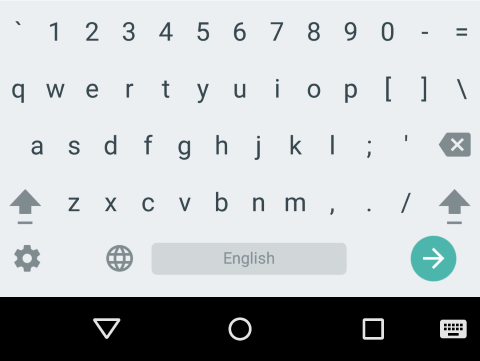
Good as it is, the Google keyboard in Android can be frustrating if you need to enter mixed letters and numbers. You must either slowly long-press numbers, or keep switching back and forth between letters and numbers 3-row layouts. Wouldn't it be nice to have a 4-row layout with both letters and numbers like your PC?

Happily, there is a way (starting with Android 4.2) to have this cake and eat it too, by enabling 4-row "PC" layout, with an easy way to toggle between 3-row and 4-row layouts. Here's how to do it in Lollipop (Android 5):
switch layout
  1. Open Settings > Language & Input.
  2. Make sure Current Keyboard is set to Google Keyboard.
  3. Open Google Keyboard.
  4. Open Appearances & layouts.
  5. Open Custom input styles.
  6. Click + to add a style.
  7. Select desired Language, select PC for Layout, then Add.
  8. Return to Google Keyboard Settings.
  9. Select Languages.
  10. Turn Use system language off.
  11. Turn on your new PC layout (in addition to your standard layout).
  12. Close Settings.
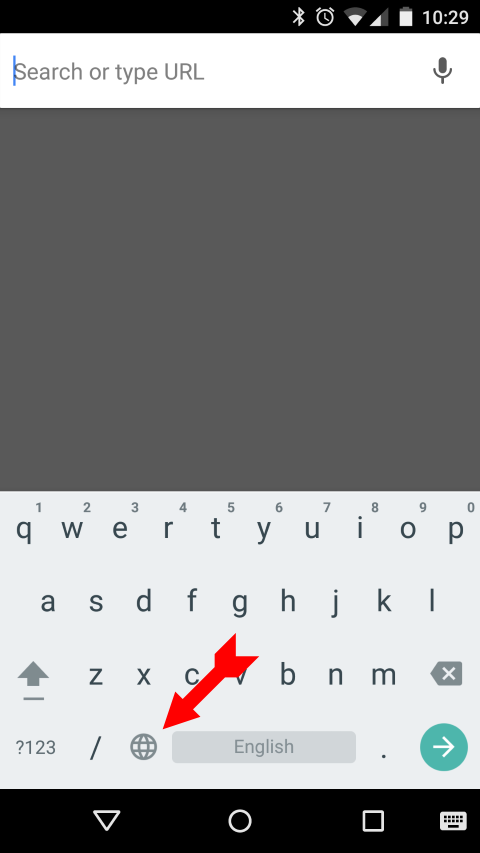
You should now have a globe icon just to the left of the space-bar on your keyboard. Selecting (touching) that globe icon should toggle between your active layouts.

Friday, March 27, 2015

Wireless HDTV Video (update)

Microsoft Wireless Display Adapter
See Wireless HDTV Video (original)

The ability to beam video to a HDTV screen without wires has been promised for quite some time, but the product methods on offer (DLNA, Miracast, Wi-Fi Direct) have proved to be disappointing, complex and/or problematic. This update adds an additional option.

Microsoft Wireless Display Adapter

Promising easy setup and compatibility with both Android (4.2.1 and later) and Windows (8.1 and later), Microsoft Wireless Display Adapter comes close to hitting the mark. Setup is indeed easy (though not entirely free of problems, since more than one connect attempt may be needed), and audio sync and video quality are quite good (significantly better than Chromecast), but motion tends to be a bit jerky (1080p video tested over a short distance from Windows 8.1 with Intel i7 processor, Intel HD Graphics 5500, and Intel 802.11ac adapter), clearly not as good as HDMI cable connection. (Frames are probably being dropped to maintain streaming.)

Google Chromecast
Google Chromecast

With mighty Google behind it, inexpensive Chromecast would seem a sure winner. But right out of the box it can be problematic because it insists on network capabilities (access to Google Public DNS servers) that make it incompatible with some wireless routers. (See Chromecast Router Compatibility) Past that point things can look good at first blush, as when casting the screen of an Android mobile, or streaming YouTube video. But push it a bit harder and warts appear. Local video (from Android mobile or Chrome browser) is limited to 720p and relatively low bit rate by default, with poor quality, and even when pushed to its limits, quality is still only mediocre at best. So if you care about video quality, Chromecast is really just another Internet streaming option.

DLNA

Many "smart" HDTV sets claim DLNA Player support, which should make it possible to beam video to them over a network connection (wired or wireless), and the ubiquitous Windows Media Player includes DLNA Server support. (See Media Streaming with Windows 7) But try to make it work and you're very likely to run into compatibility problems, since many HDTV sets are very fussy about what video formats they will (and will not) play, and Windows Media Player does not support transcoding between formats. (While there DLNA servers that can transcode on the fly, they can be difficult to set up, and the resulting quality is often mediocre. Your best bet is to use Handbrake to transcode to MPEG-4 in advance.) But even when it works, video quality is noticeably inferior to a wired HDMI connection.

Bottom line: Beaming of HDTV video without wires remains a work in progress.
  • For best quality use a wired HDMI connection.
  • If you must have wireless, Microsoft Wireless Display Adapter is the best bet.

Monday, January 26, 2015

Wireless HDTV Video (original)

Chromecast
See Wireless HDTV Video (update)

The ability to beam video to a HDTV screen without wires has been promised for quite some time, but the product methods on offer (DLNA, Miracast, Wi-Fi Direct) have proved to be disappointing, complex and/or problematic. Two current examples:

Chromecast

With mighty Google behind it, inexpensive Chromecast would seem a sure winner. But right out of the box it can be problematic because it insists on network capabilities (access to Google Public DNS servers) that make it incompatible with some wireless routers. (See Chromecast Router Compatibility) Past that point things can look good at first blush, as when casting the screen of an Android mobile, or streaming YouTube video. But push it a bit harder and warts appear. Local video (from Android mobile or Chrome browser) is limited to 720p and relatively low bit rate by default, with poor quality, and even when pushed to its limits, quality is still only mediocre at best. So if you care about video quality, Chromecast is really just another Internet streaming option.

DLNA

Many "smart" HDTV sets claim DLNA Player support, which should make it possible to beam video to them over a network connection (wired or wireless), and the ubiquitous Windows Media Player includes DLNA Server support. (See Media Streaming with Windows 7) But try to make it work and you're very likely to run into compatibility problems, since many HDTV sets are very fussy about what video formats they will (and will not) play, and Windows Media Player does not support transcoding between formats. (While there DLNA servers that can transcode on the fly, they can be difficult to set up, and the resulting quality is often mediocre. Your best bet is to use Handbrake to transcode to MPEG-4 in advance.) But even when it works, video quality is noticeably inferior to a wired HDMI connection.

Bottom line: Beaming of HDTV video without wires remains a work in progress. For best quality use a wired HDMI connection.

Saturday, December 20, 2014

Cell Phone Bargain

Moto G
Great phone. Great service. Great value.

No contract cell phone service is much less expensive than contract service, but you have to buy your own cell phone (instead of having the cost bundled into contract phone service), and an up front cost of several hundred dollars can be a significant drawback.

The Moto G, a breakthrough Android smartphone with solid specifications and an amazing price of only $180 that made no contract cell phone service much more attractive, is now even better: Net10 Wireless has a special Moto G (1st generation) price of only $120 (as of this writing) that makes it a steal! Although it's not LTE (see below), its 4G speed is still quite respectable.

Net10 Wireless is one of the best values in cell phone service, with unlimited domestic phone, text, and data (as of this writing) for only:
  • $40 per month with a small amount of high speed data (500 MB)
  • $45 per month (on auto-refill) with a substantial amount of high speed data (3 GB)
Tips:
  1. With Net10 Wireless, you can choose either the AT&T or the T-Mobile network. AT&T tends to have better network coverage. T-Mobile tends to have higher data speed.
  2. The LTE version of the Moto G (with faster data speeds) is available on Amazon for $190 (as of this writing).

Tuesday, July 29, 2014

Vehicle Mount for Cell Phone

Mountek nGroove Grip Universal
Smartphones can be excellent while driving, especially in vehicles lacking comparable electronics, providing such hands-free services as:
  • Phone calls
  • GPS location and turn-by-turn navigation with voice prompts
  • Playing music and podcasts
  • Streaming Internet radio
This works best with a mount that holds the smartphone where it can be easily seen and used. Common mounts attach to windshield or dash with suction cups that can loosen over time and which often obstruct the view. Mounts that attach to air vents partially block the vents and can make them hard to adjust.

If your vehicle has a CD player, a better mounting solution may be the Mountek nGroove Grip Universal, pictured mounted in a Volvo S60 holding a Google (LG) Nexus 5 (recommended) with a Diztronic protective case (recommended). This mount is attractive, solid and secure, tilts and rotates, attaches and removes easily, with no need to remove or modify protective cases. (If you never play CD discs, you can leave the mount attached.)
  • Cable is power from a PowerGen Car Charger (recommended)
  • Connection to car audio is by Bluetooth in the picture, but cable could be used instead
  • App displayed is CarHome Ultra, made especially for driving (recommended)

Tuesday, January 28, 2014

Earphones with Mic for Android

Klipsch Image S4A (original)
Update: There's a new king!

Your Android smartphone (or tablet) may have come with earphones/headphones, but the sound quality is probably mediocre at best. You could spend literally hundreds of dollars for the best possible sound, but roughly $100 is the point of diminishing returns, in part because "a chain is only as strong as the weakest link", and the cheap audio components in most smartphones will limit the sound quality if you spend more than that. So this list focuses on products under $100 (street price) with these characteristics:
  • Designed for Android, with single button remote
  • Mic for phone calls with good sound quality
  • Cords designed to minimize rubbing and bumping noises
  • Comfortable fit
  • Good construction
  • Good value, sounding better than the price

GOOD: Sony MDR-EX110AP ($21-25)

Cords could be better (thicker and more rubbery), but they aren't terrible, and the design is otherwise good, with sound quality comparable to products at double the retail price point, comfortable fit, light weight, and small size that keeps them inside the ear, minimizing wind noise outdoors. Available in a variety of colors. A bargain.

GREAT: Klipsch Image S4A ($45)

Excellent sound, good build quality, but the app is problematic, and fit with the oval tips can be a problem. The newer S4A (II) version features tangle resistant flat cables and other minor tweaks, but many prefer the original version, which can still be found and is usually less expensive. Tips:
  • Replace the oval ear tips with Shure memory foam "olives" (EABKF1), which install perfectly, fit comfortably, seal out noise, and improve sound by enhancing bass and taming treble just a bit. The latest version has an ear wax screen.
  • Forget the app.
  • Discontinued, replaced by replaced by Klipsch R6m.

GENERAL TIPS:

  • Don't limit sound quality with low bit-rate audio:
    • Many streaming apps (Google Music included) default to a lower bit-rate that limits quality, and there may be a Setting for higher quality (at the expense of more mobile data).
    • The bit-rate of your own audio audio files (MP3, AAC, etc) should be 175-245 Kbps. (With good encoding, higher than that won't sound better.) LAME V3 profile is a good way to get the best possible sound with the lowest possible bit-rate. 
  • Take high end audio claims with a grain of salt. Many do not stand up to serious scrutiny.

Saturday, January 18, 2014

Best USB Car Charger

PowerGen Car Charger
You purchased a "fast" car charger for your mobile device (smartphone, tablet, etc), but you find that the actual charging rate is slow, possibly not even able to keep up if you use the mobile device at the same time. What's up with that? Is the charger defective? Not really a "fast" charger?

It's the fault of the USB standard, not necessarily the charger. USB was conceived as a connection standard, not a charger standard, and to keep costs down the original standard provides only a modest amount of power, a maximum of 500 mA. But as USB gained traction as a connection standard, it also gained traction in chargers.

500 mA (½ A) is fine for a low power device like a mouse, but insufficient for fast charging of a current smartphone (~1000 mA), much less a tablet (~2000 mA). The USB standard is evolving to deliver greater amounts of power, but adoption takes time, and current USB products could be damaged by high power drain, so device manufacturers have resorted to non-standard tricks for fast charging with USB connectors:
  1. Shorted data connection: This is frequently used by Android devices (e.g., Nexus 5), which won't try to fast charge if the data connection isn't shorted, displaying (USB) rather than (AC) on the Battery screen.
  2. Non-standard data voltage: This method is used by Apple devices, with different voltages signaling different maximum charging rates. They similarly won't try to fast charge when those voltages aren't present.
Since no standard USB port should do these things, a device can assume it's on a charger rather than a USB host. But since there is no single method, and since both methods can't be used at the same time, a charger that's fast for Apple devices may not be fast for Android devices, and vice versa. So either make sure to choose the right type of charger (which can be tricky), or choose a charger that has both methods, like the excellent PowerGen 4.2A/20W Dual USB Car Charger:
  • High power for fast charging even tablets
  • Dual ports for charging 2 devices at once, one Android port and one Apple port*
  • Good physical design for secure fit and durability
  • Compact size
  • Great value: $10 at Amazon.com
PowerGen Wall Charger

Best USB Wall Charger

All of the same considerations apply, and PowerGen comes to the rescue here as well, with the PowerGen 2.4-Amp (12 Watt) Dual USB Wall Charger. Another great value: $13 at Amazon.com

UPDATE: There is now a more powerful version: PowerGen 3.4-Amp (17 Watt) Dual USB Wall Charger. Even better value: $10 at Amazon.com

* If a device is connected to the other type of port, it will still charge, but the rate may be slow.

Saturday, December 28, 2013

T-Mobile VPN Fix

Virtual Private Networking (VPN) is a secure (encrypted) way of connecting to private resources (business LAN, home computer) over the public Internet. To make a VPN connection, VPN client software typically connects to VPN server software. VPN types include Point To Point Tunneling Protocol (PPTP, deprecated but still useful) and OpenVPN (recommended, secure). But you may have a problem making VPN connections over T-Mobile USA wireless data.
The Symptoms: You are able to do things on your mobile device over T-Mobile data (browse the Internet, send and receive email, etc), and you are able to make VPN connections over Wi-Fi wireless, but you are not able to make VPN connections over T-Mobile wireless data. 
The Cause: T-Mobile apparently pushed out a data configuration in late 2013 that set APN Protocol to IPv6. That works properly for most things on mobile devices, but it prevents PPTP (built into Android) and OpenVPN (OpenVPN Connect) clients from making VPN connections.
The Cure: Open Settings > Wireless & Networks > More... > Mobile networks > Access Point Names > T-Mobile GPRS (fast.t-mobile.com) > APN protocol, and change the selection from IPv6 to IPv4/IPv6 IPv4 (see update below).
The Caveat: This cure was tested successfully with a Nexus 5 running Android 4.4.2 KitKat on a Prepaid plan, and it might not work properly on other devices or plans. Use at your own risk.
Update: IPv4/IPv6 currently causes issues with some websites (example), so try IPv4.

Friday, January 25, 2013

How To Play TuneIn Radio Pro Recordings

TuneIn Radio Pro (Android app) makes recordings in whatever format (MP3, AAC, WMA, etc) a source streams in, but does not create legal container files, making recordings (deliberately) hard to play outside of TuneIn.

To determine the format of a given source, start a manual recording and note the format shown on the TuneIn screen.

To play a recording, copy the file from the TuneIn folder on the device to a computer, and rename the file to give it an appropriate file extension; e.g., .mp3 for MP3 audio. The file should now be playable with VLC Media Player. (See example in Comments.)

To play with other players less forgiving of file format issues, it will need to be converted with a tool like foobar2000 or Audacity.

UPDATES

  1. This method does not appear to work with WMA streams. See if MP3 stream is available.
  2. In same cases TuneIn makes a recording in multiple file segments, with additional segments named -001, -002, etc.
  3. VLC Media Player on a computer can be used to transcode a network stream on the fly to any desired format.
  4. As of version 10 (October 2013), recordings appear to have been moved from open storage to protected app storage, which can't be accessed without rooting the phone.

Friday, December 28, 2012

Roku

Roku is one of the best, most affordable ways to improve your home entertainment. If you have a high-speed Internet connection, Roku can give you access to many "channels" of both free and paid content, including Amazon Instant, Netflix Instant, Pandora Internet Radio, and more. And if you have a Roku model with USB (HD-XR, XDs, XS, as of this writing), you can stream your own video, music, and/or photos from a flash drive or external hard drive.

To control the Roku you can use the included remote control, or an app running on an Android or iOS device, which control the Roku over Wi-Fi rather than infrared so line-of-sight is not required. Some of the current Roku apps for Android:
  • Roku (official)
    Works well, but requires you to sign in to a Roku account, so can't be used to control a Roku without access to the Roku account.
  • RoByte - Remote for Roku
    Works well. Recommended.
  • Rfi - remote for Roku players
    Automatic scanning fails to find the Roku XDs, and a pain to set up manually.
  • Remote for Roku
    Lags after touching controls can make it hard to control a Roku properly.
For streaming of your own content through a USB-equipped Roku, a small USB-powered hard drive is a good alternative to a typical USB flash drive, particularly if you have a lot of content, not only much higher capacity, but also much faster. A good choice to match and complement Roku is the Western Digital My Passport, with sale prices as low as $50 for the 500GB size.

Perhaps the best alternative to Roku as of this writing is VIZIO Co-Star, a 2nd-generation Google TV box that's similar to Roku. Pros include the more sophisticated Android platform, wealth of Android apps, Chrome Internet browsing, 3D support, DLNA, and HDMI pass-through. Cons include greater complexity, lower maturity, blocking of some content, clunky remote, and less smooth interface. Google TV devices will likely continue to improve.

Update (January 7, 2013): Another promising Google TV alternative to Roku is the new NETGEAR NeoTV PRIME.

Thursday, October 13, 2011

Windows 8 Preview

The Windows 7 UI (user interface) is significantly improved over Windows XP, but both suffer from the ancient PC app-centric paradigm, in which often huge monolithic apps (like Microsoft Office) are launched to do simple tasks, which is slow and painful on even the fastest hardware. Yes, we can leave multiple apps running, but that's confusing to average users, and tends to consume huge amounts of system resources (hurting performance). Attempts to make the PC document-centric haven't really helped. This is a big part of the reason that Google is developing Chrome OS for lightweight cloud-centric PC computing.

Part of the appeal of Google Android and Apple IOS is that they are task-centric, with lightweight tasks (apps) designed to be suspended and restarted quickly and seamlessly. When you're in (say) Gmail in Android, you can touch Home and then (say) Maps to quickly switch to that task, with Gmail suspended in the background consuming relatively few system resources, and if Android needs those resources, it can kill Gmail while saving state information for a fast restart. If you then touch Home and Gmail again, you are right back where you left off in Gmail whether Gmail is being awakened or restarted. You never have to close an app. There's really no way to do this in Windows without a huge performance hit and/or a huge amount of re-engineering that isn't going to happen. Plus cloud-centric computing is already built into Android, and now into IOS as well (the biggest part of the iPhone 4S announcement).

Another part of the appeal of Android and IOS is the ability to easily merge disparate sources into one UI component; e.g., a widget that merges phone (Google) contacts, Facebook contacts, Twitter contacts, etc. Windows 8 is an attempt to do this on the PC, but since it fails to solve the app-centric paradigm issue, I don't think it's going to be all that successful -- Windows users have too much invested in current apps and how they work. What I think Microsoft really needs is a new cloud-centric desktop OS (like Chrome), but the Windows 8 Preview isn't even half that loaf. Microsoft may now get it, but apparently lacks the courage to do it.